Hate Crime Hoax

In 2017, five black cadet candidates attending the US Air Force Academy Prep School were attacked by racial slurs written on message boards on their doors by an unidentified student. This seized the attention of the US Air Force Prep School and was addressed with gravity and concern. Lt.Gen. Jay Silveria, the superintendent of the school, delivered a moving speech about diversity and encouraged students to record and spread the message. The video was posted on YouTube and was commended by former vice president Joe Biden and Senator Joe McCain.

However, further investigation later revealed that the culprit of the offensive deeds was one of the “victims” who claimed to be targeted. The culprit, who was not identified by the news, confessed to his actions and expressed his regret. This act of faux interpersonal racism cost the student his admission at the Academy and morphed into a reflection of internalized racism. It is one of many examples of the hate crime hoaxes that have been reported within the past few years. Though it does draw attention to the presence of racism, it does so in a deceptive and uncandid  manner that creates a sense of mistrust within and outside of the various diverse communities existing in our nation. Events like these are harmful towards activists’ efforts against real racist incidents occurring in people’s everyday lives. It questions the credibility of activists’ work and tarnishes the image of the sincerity they try to maintain for the sake of civility.  Instead of bridging the gap of inferiority and resentment caused by the racial issues in our society, hate crime hoaxes enlarge and aggravate the unwanted division in our nation and prove to be an obstructive approach to achieving the harmonious, inviting atmosphere we strive to nurture our future generations in.

blog

Structural Racism at Yale

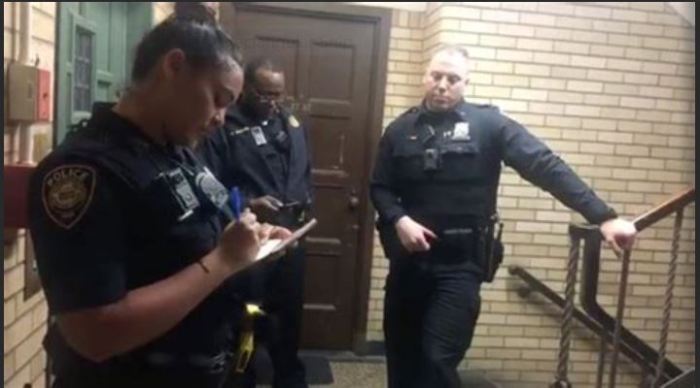
Ms. Lolade Siyonbola, a Yale Graduate student, recently became a victim of racial profiling. She had been working on a paper and fell asleep when a fellow white student called the police on her after finding her sleeping in the common room of their dorm. The white student had reportedly said “You’re not supposed to be sleeping in here. I’m calling the police.” Siyonbola recorded the incident, posted it on Facebook, and received thousands of responses. The video received more than 480,000 views, 7,500 shares, and 12,000 comments.

Most comments were supportive of Siyonbola’s objections to justifying her place at Yale. The extreme extent of action the unidentified white female took was an unnecessary act of structural racism. Because Siyonbola was black, she immediately raised suspicion from the ignorant student and the police. She was required to provide the police her student ID to prove she was a student and was checked in the student database.

Ms. Siyonbola’s case is only one of many incidents caused by structural racism that have occured in America. Society creates a prejudicial perspective on black people through the use of media, which warps our perception of African Americans in our own personal lives. In response to Ms.Siyonbola’s dilemma, the Graduate School of Arts and Sciences Dean Lynn Cooley emailed students, emphasizing the importance of inclusivity and invited them to share their comments about the matter. On a wider scale, police are now trained on unconscious bias, de escalation techniques, problem solving, and treating every individual with respect. It is pertinent that we do not neglect the importance of incidents like these, for the arousal of the people is the birth of change.

aah3


The African American Struggle

From the No Child Left Behind Act (NCLB; 2002-20015) to the Every Student Succeeds Act (ESSA; 2015-present day), government efforts have assured us citizens that recognition of the educational impediments have not been overlooked. Laws similar to these have been passed to address the achievement gaps found within groups of students in poverty, students receiving special education sources, minorities, and students who speak or understand limited or no English. Despite these valiant efforts to right the intellectual imbalance reflected, African American students still seem to be at a disadvantage. According to the Nation’s Report Card, only 3% of fourth grade African American students from New York scored Advanced on the National Assessment of Educational Progress (NAEP) and 19% scored Proficient. Meanwhile, 13% of white students scored Advanced and 47% scored Proficient. This achievement gap is significantly narrower than the gap in 1998 by 37 points, but is still concerning enough for families, teachers, and students to fight against the pertinent struggle of where we place African Americans in our lives today.

Economist and social theorist Dr. Thomas Sowell of Stanford University compared the results of students from various schools within the state of New York and pointed out that of the 39% that scored a Proficient in math, 100% of the students from Crown Heights Success Academy -a school consisting of a 90% Black and Hispanic student population- scored Proficient. From this analysis, the Media Research Center collected that liberals believed integration was necessary for the academic success of African American students. In support of that, the National Education Association states, “There is a need to increase diversity and cultural competence in the teaching workforce. Recruiting and retaining teachers of color is important, as some children of color will go through their entire educational career without having a teacher who looks like them or who can identify with the uniqueness of their cultural heritage.”

Highlighting the influential presence of diversity, it is undeniable that African American students are more than capable of performing just as proficiently as any other race. The issue with the education of our black students lies with the environment we cultivate them in. Lack of representation in the educational community is only one of many factors that result in a poorly performing group of unempowered people. With the rise of awareness, people are actively fighting to make changes to our education system in order to close the achievement gap and help our nation collectively progress together for the academic success of all Americans.